Saturday, October 01, 2005

Charles Murray - the Poor versus the Underclass

Charles Murray looks at the poverty we saw in New Orleans and raises the distinction between the poor and the underclass. Being poor means having low income and assets. The way out of poverty is well known - work. People who work do not remain poor. In the hurricane aftermath in New Orleans the poor did what they could to take care of themselves. But there were people who looted and women who didn't do what they could, but waited for someone else to provide for them. These people are the underclass. Murry covers this in the Wall Street Journal on 9/29. Here it is hosted at the American Enterprise Institute.
We in the better parts of town haven't had to deal with the underclass for many years, having successfully erected screens that keep them from troubling us. We no longer have to send our children to school with their children. Except in the most progressive cities, the homeless have been taken off the streets. And most importantly, we have dealt with crime. This has led to a curious paradox: falling crime and a growing underclass.
The big problem is unsocialized young men. The first mark is crime.
The underclass has been growing. The crime rate has been dropping for 13 years. But the proportion of young men who grow up unsocialized and who, given the opportunity, commit crimes, has not. A rough operational measure of criminality is the percentage of the population under correctional supervision. This is less sensitive to changes in correctional fashion than imprisonment rates, since people convicted of a crime get some sort of correctional supervision regardless of the political climate. When Ronald Reagan took office, 0.9% of the population was under correctional supervision. That figure has continued to rise. When crime began to fall in 1992, it stood at 1.9%. In 2003 it was 2.4%. Crime has dropped, but criminality has continued to rise
The other symptom of the underclass is young men who choose no to work.
Among black males ages 20-24, for example, the percentage who were not working or looking for work when the first numbers were gathered in 1954 was 9%. That figure grew during the 1960s and 1970s, stabilizing at around 20% during the 1980s. The proportion rose again, reaching 30% in 1999, a year when employers were frantically seeking workers for every level of job. The dropout rate among young white males is lower, but has been increasing faster than among blacks. These increases are not explained by changes in college enrollment or any other benign cause. Large numbers of healthy young men, at ages when labor force participation used to be close to universal, have dropped out.
Why has the underclass grown during this time of increasing prosperity?
In large part, I would argue, because the proportion of young males who have grown up without fathers has also risen relentlessly. The indicator here is the illegitimacy ratio--the percentage of live births that occur to single women. It was a minuscule 4% in the early 1950s, and it has risen substantially in every subsequent decade. The ratio reached the 25% milestone in 1988 and the 33% milestone in 1999. As of 2003, the figure was 35%--of all births, including whites. The black illegitimacy ratio in 2003 was 68%. By way of comparison: The illegitimacy ratio that caused Daniel Patrick Moynihan to proclaim the breakdown of the black family in the early 1960s was 24%.
Does he think our government can improve this situation? Not by doing the things that have already failed - at huge expense.
Hurricane Katrina temporarily blew away the screens that we have erected to keep the underclass out of sight and out of mind. We are now to be treated to a flurry of government efforts from politicians who are shocked, shocked, by what they saw. What comes next is depressingly predictable. Five years from now, the official evaluations will report that there were no statistically significant differences between the subsequent lives of people who got the government help and the lives of people in a control group. Newspapers will not carry that story, because no one will be interested any longer. No one will be interested because we will have long since replaced the screens, and long since forgotten.

Private aid in Gulf Hurricane Relief

In Mississippi people have found a great difference in the major groups giving aid. The Salvation Army was there quickly. And their people knew what they were doing. The Wall Street Journal reports on page 1 Thursday
Then city officials and residents counted their blessings, thanking the dozens of volunteers who had arrived here after the storm and the donors who had sent money and supplies. People in the crowd saved their biggest applause for the Salvation Army. "They were the only ones here in the beginning," Eula Crowell, 57 years old, said after the meeting. She lost her house to the massive storm surge that inundated East Biloxi, where many of the city's poorest people live. For the past month, she has relied on the Salvation Army for water, hot meals, groceries and other basic goods. The group also gave her $50.
But the Red Cross received few accolades:
The American Red Cross was mentioned at the meeting too, but in a different way. "We want to know where the money is," Ms. Crowell said when she cornered a Red Cross official who attended the gathering. "All these people across America are giving money over the TV. I would tell them to put it back in their pocket." Across the hurricane disaster zone, stretching from Alabama to Texas, an unexpected and unintended rivalry has developed between the two nonprofit organizations most closely associated with the aftermath of calamity. Here in some of the poorest parts of Mississippi and much of the Gulf Coast, the Salvation Army is drawing praise for its swift arrival in the most distressed areas and clearly winning the hearts of desperate residents. To some people here, the Red Cross, under growing criticism for letting bureaucratic hurdles slow down aid in the disaster area, suffers by comparison.
The difference:
The Salvation Army is helped by its military-style structure, which is designed for rapid mobilization and which puts a premium on training people in advance to deal with disasters. It can draw on more than 65,000 employees in the U.S., nearly double the paid staff of the Red Cross. The Salvation Army's daily work in permanent shelters with the homeless and poor and with people trying to put their lives back together after an apartment fire or years of alcohol and drug abuse helps too. The organization's focus on alleviating human suffering in the name of Jesus Christ resonates in this section of the Bible Belt.
But with its money the Red Cross is doing a lot:
This past weekend, the organization housed 120,000 people in nearly 500 shelters across the country, split about evenly between people who evacuated for Katrina and Rita. The Red Cross is housing another 300,000 in hotels and has given 530,000 families some form of financial assistance.
While the Red Cross raises lots of money it seems to have an entitlement mind set, being "the" emergency relief provider of the establishment. They bring lots of money and hire people for the short term. But those people are green. While the quiet Salvation Army does more with less money. The WSJ link is an email link and should work until Thursday

Thursday, September 29, 2005

Spending Restraint?

We can't write a blank check for Alabama, Mississippi and Louisiana. Even if the famously corrupt politicians of Louisiana were bypassed and every dollar went for its intended purpose, we can't afford another $60 billion or $200 billion! The web effort to encourage cutting the pork has been substantial - see NZ Bear's Porkbusters - but ignored, as far as we know. Good News! There is a sign of life. In the US Senate, of all places. Bob Novak reports at Real Clear Politics.com
WASHINGTON -- The Senate was up to its old tricks Monday evening. It prepared to pass, without debate and under a procedure requiring unanimous consent, a federal infusion of $9 billion into state Medicaid programs under the pretext of Katrina relief. The bill, drafted in secret under bipartisan auspices, was stopped cold when Republican Sen. John Ensign voiced his objection. The bill's Democratic sponsors railed in outrage against Ensign, a 47-year-old first-termer from Las Vegas, Nev., who usually keeps a low profile. But he was not acting alone. Ensign belongs to, and, indeed, originated, a small group of Republicans who intend to stand guard on the Senate floor against such raids on the Treasury as Monday night's failure. The group includes Sen. John McCain, who long has tried to wean Republicans from ever greater federal spending but attracted little support from GOP colleagues until recently.
The bill they stopped - or delayed - was pork at its worst. You find a specific need that is widely accepted, then you put your own pet project on it.
The "emergency" Medicaid bill is a classic case of how government grows and spending soars. Democratic Sen. Blanche Lincoln, concerned by health problems of evacuees in her state of Arkansas, introduced a bill increasing Medicaid funds to the states. The Senate Finance Committee's Republican chairman, Chuck Grassley, and its ranking Democrat, Max Baucus, drafted the scaled-down, $9 billion substitute and marked it for quick passage. No hearings, no debate, no trouble... Ensign noted that Congress had appropriated an extra $62 billion in the wake of Katrina. He pointed to the fact that the bill is a general Medicaid enrichment unrelated to hurricanes. It makes sure that 29 states scheduled for federal Medicaid cuts would be "held harmless" -- that is, would not suffer a reduction. That list is headed by $78 million in extra funds for Alaska.
The Alaska pork master, Don Young, is at it, even in the Senate! The two Republicans from South Carolina are on the team also - Lindey Graham - we are watching him - and Jim DeMint.

Wednesday, September 28, 2005

Democrats decline influence over court appointments

Our US Senator Cantwell announced that she will vote against John Roberts for Supreme Court Cheif Justice. Seattle Times I think she made a mistake and Senator Leahy of Vermont made a wise move by voting for him. Here is the letter I sent Senator Cantwell today:
Senator Cantwell, Justice Ginsburg got 96 votes in the US Senate. Not because the Republicans supported her positions on issues, but because she was qualified and the president chose her. Why aren't you Democrats as fair as the Republicans? You have shown that you will vote against any nominee of President Bush - even the most qualified. You have shown that you are an extremist. If Roberts had gotten a lot of Democrat votes you would have shown that you judged each individual. And you would have had some sway over future nominees. But since you will vote against anyone you have no influence over Bush. If you want Supreme Court justices that reflect your views then you had better win some elections. President Bush makes court choices, not you senators. Truly, Ron Hebron

Media Low Lights

Cindy Sheehan got a private interview with Senator McCain by lying. Lying. She got to see him because she said she had one of his constituents in her group, but she did not.
He said he might not have met with Sheehan had he known none of his constituents was in the group.
I include this under "media low lights" because she is the creation of the media. See National Review Online's Media Blog NBC supports lying reporters. This is Dan Rather PLUS. On MSNBC's Scarborough Country a Louisiana-based reporter Heath Allen said:
It’s the responsibility of the photojournalist to capture that and put it on television because those people at that point needed help no matter what was true, what was false, what was exaggerated.
And Dan Rather himself is still clinging to the lights, even though they were turned off. RadioBlogger has the transscript of Dan's interview with Marvin Kalb. Here is Duane's intro:
Elder abuse. Oh, sure. I could have come up with some clever title for the staged interview between Marvin Kalb and Dan Rather at George Washington University two nights ago. But after you read and hear these two ponderous dinosaurs talk about what is or isn't journalism, what is or isn't media, and what is or isn't reality with regards to the Bush National Guard story, I'm afraid the reaction in the blogosphere, especially on the conservative side, could easily be considered elder abuse. Want an example of Dan at his most vacuous? Here's 13 of them. If you want to be the Blogger of the Week and needed help, pick one of these and do some analysis.

Monday, September 26, 2005

NOLA - Watch Your Wallet

We need to and intend to rebuild New Orleans, Lousiana. But we have to be careful with our money because Louisiana has a long and wide history of corrupt politicians. John Fund in the Wall Street Journal's Opinion Journal points out today:
In just the past generation, the Pelican State has had a governor, an attorney general, three successive insurance commissioners, a congressman, a federal judge, a state Senate president and a swarm of local officials convicted.
Only Arkansas could match that recent record. ;-) Even one of the levee boards was under investigation at the time Katrina hit. And just this summer:
As for New Orleans, no city in America would better serve its most vulnerable residents with a clean sweep of its institutions. Just this summer, associates of former mayor Marc Morial were indicted for alleged kickbacks involving public contracts. Last month the FBI raided the home and car of Rep. William Jefferson as part of a probe into allegations he had misused his office.
We have to have careful control of the funds we provide. We have to be sure the LA politicians don't pay each other off with our money. Is this partisan politics or reputable oversight?
Despite assurances from President Bush, "the government is fighting this war [on waste] with Civil War weapons, and we're just overwhelmed," Joshua Schwartz, co-director of the George Washington University Law School's procurement law program, told Knight Ridder. Democrats are already scoring political points. Rep. David Obey, the ranking Democrat on the House Appropriations Committee, is lamenting the lack of accountability in the aid package. He is calling for "the beginning of some new thinking" on how to handle disaster relief.
Actually, I agree with the Democrat. But honorable Senator Landrieu will deck you if you interfere with her family's "right" to control most everything:
Indeed, many local officials are quick to attack any outsiders who question the local way of doing things. Sen. Landrieu is especially sensitive since politics is her family's business. Her father was mayor of New Orleans, her aunt sits on the city's school board, and her brother is the state's lieutenant governor. She did a passable imitation of the overwrought Aaron Brossard when she told ABC News that if President Bush utters any criticism of how local officials responded to the disaster "I might have to punch him--literally."
If the they send street fighters to the US Senate imagine what sort of politicians they are hiding at home.

Sunday, September 25, 2005

France fighting declining population

France has looked the "benefits" of a stable or declining population in the eye and has concluded that the costs are higher than the benefits. France announced that women will be rewarded for having children this week. Deutsche Well reports:
They include an increased monthly grant for mothers who take time off work for a third baby. France has one of the highest birth rates in Europe. Of the 25 nations in the European Union, only Ireland's rate is higher.
The problem is not enough children to support the social welfare programs 10 years and more in the future. You can't have lavish benefits for everyone if there is not enough tax revenue to support them.
Evelyne Sullerot, one of France's leading sociologists, points out that France also has one of Europe's highest proportions of women in the workforce. She adds that more needs to be done to promote a balance between work and family life. "Things aren'’t going well in France. With 1.9 children per woman, we have one of the highest birth rates in Europe. But itÂ’s still not enough for us to reproduce our generations," said Sullerot.
And they see the requirement to work as reducing the birth rate.
Prime Minister Dominique de Villepin said the new measures were intended to "allow a better conciliation between professional and family life up to the child's majority." Under the proposals, a parent who takes time off from work for a third child will have the option of a boosted monthly pay-out of 750 euros ($915) for one year. Currently the figure is set at $500 available over three years. According to Hubert Brin, president of the National Union of Family Associations (UNAF), the increased payment is to encourage higher-earners to have a third child. The current rate is only attractive for couples on low incomes. But we have to encourage professionals with higher incomes to have babies," he said.
And how about other countries in Europe? Is this a trend?
Falling birth rates are a growing worry across the EU, with demographers predicting that large-scale immigration will be necessary in many countries in order to sustain the benefits enjoyed by a steadily aging population.

Saturday, September 24, 2005

Dead voters in Sri Lanka

They intend to top Ron Sims's mismanagement of voting in King County. From the BBC: Tsunami dead to get voter cards
Sri Lanka is to send out voting cards for those people believed to have died in December's tsunami because it cannot be sure who survived. The country is holding its presidential election on 17 November. The election commission fears electoral fraud by people impersonating the dead, so the cards will be specially marked to show the voter is believed dead. Those that have survived will have to prove their identity. More than 30,000 died in the tsunami in Sri Lanka.
Yes. If we mailed voter registration cards to dead people we would have to be on the watch for people impersonating them. OK. They have a problem not knowing who lived and who died. Here is my idea. Make everyone register again. It is much harder for a dead person to impersonate a living one than for a living person to impersonate a dead one. ;-)

Thursday, September 22, 2005

Distorted News on Sheehan

How do you make a pitiful showing of 30 people appear to be a crowd? This is the group of 30 people Cindy Sheehan attracted from throughout the 50 states of the US to march on the White House yesterday, September 21. Not much of a showing if you ask me. Confederate Yankee reports that all the major news media left out this one fact - only 30 people participated. PowerLine Blog
After a carefully stage-managed vigil by liberal PR firm Fenton Communications, and a pair of 3-week long national bus tours to drum up support for her cause, "Mother Sheehan" managed to bring with her just this tiny gaggle with her to the gates of the White House. The organizers backing her show hope to draw "tens of thousands" of fellow protestors this weekend, but if this sad crowd and last night's turnout of just 150 in New York are any indication, the fledging anti-war movement of Cindy Sheehan is all but dead.
And Getty Images, a top source of photos for professionals, carefully cropped each of the photos they are selling. It looks like a crowd when you close in on a handful and leave out the "panorama" showing all 30. Getty's 12 photos

Wednesday, September 21, 2005

Pay for NOLA by cutting pork spending

We need to rebuild the coastal area devastated by hurricane Katina - Alabama, Mississippi and Louisiana. But ee can't just "find" $200,000,000 to do it. Congress is irresponsible if it just throws the ball down the field by spending money out of thin air. Where are those dollars coming from? The Highway Bill passed by Congress this summer is filled with "highways to no where" - special little projects for one congressman to buy votes from his district. For one of the worst offenders and his "important" projects see Scott Glabe at Weekly Standard - "Old Don Young Had a Farm"
"DON YOUNG'S WAY" is a $231 million bridge to be built in Anchorage. Don Young's "way" is to use his position as chairman of the House Transportation and Infrastructure Committee to bring home as many federal dollars as possible for his home state. For instance, the highway bill passed at the end of July netted over $1 billion in special projects for Alaska. That's $1,448 in pork for every man, woman, and child in Alaska. Young's eponymous bridge isn't even the most egregious bit of largesse. That honor goes to another bridge, which, for $223 million will connect Ketchikan, population 8,000, with Gravina Island, population 50. The Gravina Island Bridge, which is slated to be taller than the Brooklyn Bridge, will be a towering monument to unnecessity; the small island is already served by ferries, one of which departs every half hour. Young claims the bridge will facilitate Ketchikan's growth by providing ground access to the airport on Gravina Island, a rationale that is sure to be mentioned in a "documentary about infrastructure that demonstrates advancements in Alaska, the last frontier," to which the highway bill allots another $3 million. Perhaps the documentary will also explain how an airport with fewer than 10 flights a day can facilitate such growth, or why the government simply doesn't purchase a Lear Jet for every inhabitant of Gravina Island--which, as Citizens Against Government Waste has noted, would be cheaper than the bridge.
OK. Let's do something about this. N.Z. Bear is running a pork-identification project--with a powerful assist from Glenn Reynolds--in which bloggers point out federal spending that could be cut to balance out the costs of Katrina reconstruction. It's a great idea, and it has a nice logo: We can help. Find a wasteful project in your state or - best - congressional district. Then go to Porkbusters and enter it.

Monday, September 19, 2005

Violating the Constitution in New Orleans

While looters were shooting at them the police made the situation less safe. Did the police need the help and cooperation of law-abiding citizens? Yes, they needed them. But the police refused them. The police violated the Constitution of the United States by confiscating the legal weapons of law-abiding people. But they didn't take guns from the criminals. So they made the situation less safe. By what authority did they do this? None. What they did was illegal. Dimitri Vassarlos of the Pittsburgh Tribune-Review has this one liner:
Businesses selling bumper stickers that read "If guns are outlawed, only outlaws will have guns" also should offer one with the rejoinder "We told you so."
Update. See also Gun Owners of America Update. 9/24/05 The police now have to obey the Constitution because a "higher authority" requires them to; a federal judge issued a restraining order. Why they were exempt before I dont' know. In The Houston Chronicle
In documents filed in federal court in Baton Rouge, La., New Orleans Mayor Ray Nagin, Police Chief Eddie Compass and St. Tammany Sheriff Jack Strain deny ordering the confiscation of firearms. But news reports quoted Compass as saying that only law enforcement officials would be allowed to have firearms and Deputy Chief Warren Riley as saying, "We are going to take all the weapons."
And we saw what they said on those news reports.

Sunday, September 18, 2005

Blair Kills Kyoto at Clinton's Summit

UK PRime Minister Tony Blair stood on stage with Bill Clinton and announced that the UK will not be bound by the Kyoto Treaty on Global Warming. Why would Blair do such a thing? Because he does not want to send his country backward; he refuses to kill all economic development in the UK. James Pinkerton at TechCentralStation.com has the story:
"My thinking has changed in the past three or four years." So what does he think now? "No country," he declared, "is going to cut its growth." That is, no country is going to allow the Kyoto treaty, or any other such global-warming treaty, to crimp -- some say cripple -- its economy. Looking ahead to future climate-change negotiations, Blair said of such fast-growing countries as India and China, "They're not going to start negotiating another treaty like Kyoto." India and China, of course, weren't covered by Kyoto in the first place, which was one of the fatal flaws in the treaty.
The US Senate voted 95 to 0 to reject the Kyoto treaty if developing countries were excluded and they were. And he was looking to the future:
But now Blair is acknowledging the obvious: that after the current Kyoto treaty -- which the US never acceded to -- expires in 2012, there's not going to be another worldwide deal like it. So what will happen instead? Blair answered: "What countries will do is work together to develop the science and technology….There is no way that we are going to tackle this problem unless we develop the science and technology to do it." Bingo! That's what eco-realists have been saying all along, of course -- that the only feasible way to deal with the issue of greenhouse gases and global warming is through technological breakthroughs, not draconian cutbacks.
Now he's talking my language. Trying to promote growth instead of agreeing to quotas that can only be met by shutting down industry and requiring people to stop driving. Rather, let's work on technology that can reduce the emissions we are concerned about. Isn't it fitting that Blair did it at the conference Bill Clinton put on to showcase himself and Hillary? Pinkerton says that major media didn't cover Blair's statement, so it seems to be a TCS exclusive - by default. But soon everyone will know it.

Saturday, September 17, 2005

Marriage Helps Family Finances

According to a report by the Brookings Institution and Princeton University, stable marriage can increase the financial prosperity of couples and improves the lives of American children. The study finds that while the poor see lack of money as a barrier to marriage, a healthy marriage actually ensures them healthier finances in the long run. And this is true even when the couple had children out of wedlock. Brookings Institute is not conservative at all; Princeton University too. They highlight some signs of interest:
The Bush administration is proposing to spend $1.5 billion over the next five years to increase “healthy” marriages. Gays and lesbians are demanding the right to marry. A few states are reconsidering no-fault divorce laws and experimenting with new types of “covenant marriage.” And legislators are scrutinizing tax and transfer policies for “marriage penalties.”
The report consists of several articles including: Healty Marriage Programs: Learning What Works by M. Robin Dion (Mathematica Policy Research) on marriage education programs. Via World Magazine's blog. Reuters also carried a summary of the report.

Friday, September 16, 2005

Honor our US Constitution

Saturday is Constitution Day. Thomas Sowell asks at Townhall.com: "Why do we pay attention to the Constitution in the first place?"
But the moral and legal bases for the authority of the Constitution do not rest with those who wrote it. The moral and legal authority of the Constitution comes from those who ratified it -- "we the people" -- not those who wrote it.
That's you and me, not the 100 Senators who look so important on television. CFIF recommends that we celebrate this day by - surprise - reading it. Find it HERE.

Wednesday, September 14, 2005

Crisis at the United Nations

The United States has finally taken the logical action. Everyone knew the party couldn't last forever. But now it is over. The United States has been paying 23% of the budget of the UN, funds 48 per cent of the UN's World Food Program and 41 per cent of the UN High Commission for Refugees. And what have we gotten? Endless abuse. When Kofi has messed up his budget and needs cash, who comes through? The United States. Now the US is asking the UN to reform itself and Ambassador John Bolton is doing the asking! Some of our complaints as listed by the Telegraph newspaper of the UK:
  • Only last week the UN was described as incompetent, corrupt and in urgent need of change by the Volcker commission, the organisation's own report into the Iraqi oil-for-food scandal.
  • Elsewhere in the organisation, Washington looks on enraged as countries such as China and Cuba are voted on to the UN's human rights commission.
  • America is appalled too by the UN bureaucracy, where staff are appointed according to nationality and where pay aims to match that of the most generous member state.
  • Yet few UN civil servants are ever held to account, as the oil-for-food report underlined. Even before it was published, Kofi Annan, the UN secretary general, said: "I don't anticipate anyone resigning." No one did, despite blistering attacks on named staff including Mr Annan himself.
They won't even do anything when they got caught with the largest misuse of funds in history - the "Food for Oil" program. So Bolton stepped in:
Yesterday, with just 24 hours to go before world leaders convene for the UN's 60th birthday summit, Mr Bolton was still refusing to agree a shopping list of ambitious policies designed to change the world. Many are in stark opposition to the policies of President George W Bush's administration. Why, the Americans are asking, should we go along with this?
The "ambitious policies" are the same old stuff from the UN's bureaucrats. Empty words about reform. And solid proposals to get the US to pay more. In past years our diplomats went along with most of this nonsense. But now the party is over for the UN. What does the United States want the UN to do? To promote democracy. To stop glorifying dictators. The have the Human Rights Commission to be composed of countries that uphold human rights, not the abusers like Sudan and Libya. To get rid of corruption that has been allowed to entrench itself and grow. Hopefully change can begin now.

Tuesday, September 13, 2005

Cantwell Dunce of the Week

We are all bothered by the even higher price of gasoline this week. Can't someone do something about it? Two actions can improve it: 1- increase the supply of refined gasoline, or 2- decrease the demand for it. Enough of either will bring the price down. Can a US Senator increase the supply or decrease the demand? I haven't seen one do it. But Senator Maria Cantwell has another course of action: price controls. Both the theory and the experience of economics show what happens when the price is limited in the absence of actions 1 and 2 - you get a shortage. It has happened every time. Wikipedia In 1973 price controls resulted in rationing and line ups at every gas station and gimicks to reduce them, such as alternating days by even-odd license plates to match the numeric day of the month. Jeff Jacoby says it well:
There is only one rational and efficient way to allocate a scarce commodity: through price. That is because the more a person values something, the more he is generally willing to pay for it. By charging what the market will bear -- for gasoline or anything else -- vendors channel their product to the customers who value it the most. A mandatory cap on the price of gas may seem like kindness to the poor, but all it will do is raise demands that can't be met. The result will be "Sold Out" signs on Joe's pumps, or gasoline lines stretching around the block.
And
Painful as they are, price spikes are invaluable -- especially after a disaster, when critical goods and services are at a premium. At $3 or $4 a gallon, post-Katrina gasoline prices are transmitting two urgent messages. To consumers they say: "Conserve! Buy only as much as you really need, and look for ways to use even less." To the energy industry they say: "Produce! Get those refineries back online and supply more gasoline ASAP." Aren't those exactly the behaviors we want to encourage? But the power of market pricing to affect behavior is unwelcome to those who think useful things don't happen unless the government tells them to happen. In The New York Times last week, Senator Levin dismissed the idea that higher prices will induce consumers to use less gasoline. "By that logic," he snorted, "you could raise prices to $10 a gallon and you make sure that people walk." In the real world, though, consumers do make choices based on price, as the large photo accompanying the Times story illustrated nicely. It showed a woman turning away from gasoline pumps charging $5.88 a gallon. The caption read: "The price of gas at a station in Stockbridge, Ga., last week was too high for one customer, who returned to her car without buying."
Back to Cantwell. Rich Karlgaard of Forbes Magazine honored her as
Dunce of the Week
for this brave proposal. Actually she isn't the only one! Two more US senators and the governor of Hawaii share the "Dunce" award. See also No Price Gouging.

Monday, September 12, 2005

The Israelis may save the world - Hydrogen

Scientists in Israel have invented a process to produce hydrogen from the sun's energy. Hydrogen is the fuel of the future, everyone seems to agree. But the future has appeared to be far off because producing hydrogen has required burning fossil fuels - that's supposed to be the past. But now there has been a breakthrough, Israel 21C reports:
In a breakthrough that has dramatic implications for energy use worldwide, Israeli researchers have shown that hydrogen fuel can be produced with the help of sunlight - propelling the dream forward of using hydrogen as a 'green' fuel. The innovative solar technology developed at Weizmann Institute of Science that may offer an environmentally sound solution to the production of hydrogen fuel has been successfully tested on a large scale, and also promises to facilitate the storage and transportation of hydrogen. The chemical process behind the technology was originally developed at Weizmann on a scale of several kilowatts. It was then scaled up to 300 kilowatts in collaboration with scientists from the Swiss Federal Institute of Technology... The new solar technology developed by the Israelis and their European colleagues creates an easily storable intermediate energy source form from metal ore, such as zinc oxide
And the storage problem is handled by this method, as well:
The process generates no pollution, and the resultant zinc can be easily stored and transported, and converted to hydrogen on demand. In addition, the zinc can be used directly, for example, in zinc-air batteries, which serve as efficient converters of chemical to electrical energy. Thus, the method offers a way of storing solar energy in chemical form and releasing it as needed.
And there have been enthusiastic reactions, such as:
"The Israelis may save the world if this technique for producing hydrogen pans out and proves practical," wrote Professor Juan Cole of the University of Michigan on his influential blog Informed Comment.
I continue to be optimistic about our energy future because the Earth is bombarded with huge amounts of energy from the sun every day. We just have to find ways to capture, store, transport and use the solor energy. Hat tip to The American Thinker. They say that Juan Cole has nothing good to say about Israel, so his endorsement is a strong indication.

Sunday, September 11, 2005

Remember 9/11

Don't forget. We didn't realize we were at war through attacks in New York in 1993, against US barracks in Saugi Arabia, two US emabassies in East Africa simulataneously, and the USS Cole. It took simultaneous attacks on New York City and Washington, DC, before we realized. Don't forget.

Friday, September 09, 2005

No Price Gouging

We see it again. When an event causes a shortage that everyone knows about, prices start going up - as you would expect. Then some US Senator says "Price Gouging." Then every talking head starts parading their ignorance. "This was done intentionally by BIG OIL." ... etc. Prices change according to the Law of Supply and Demand. If the supply is cut, but no one wants the commodity, then the price goes down slightly. If the supply is cut, but there is constant or increasing demand, then the price goes up. And those who value the commodity the most get it, because they are willing to pay more. Anyone who tries to do away with the Law of Supply and Demand makes things worse - they cause shortages. Iain Murray at TechCentralStation covers the basics.
For various reasons, I took a lot of trips to the local hardware store on Sunday. On my route there were two gas stations gazing at each other across the thoroughfare. On the first trip, I noticed that one was charging $3.41 a gallon for regular, while the other was charging $3.29. And there, in a nutshell, was proof that gas price "gouging" does not exist. This was actually an excellent case study for the basic economic lesson on supply and demand in situations of scarcity. Price is not an arbitrary figure. It contains a vast amount of information from the viewpoints of both the supplier and the customer. In normal circumstances it represents a balance between the effort and risk undertaken by the supplier to provide the product and the preferences and needs of the potential consumer taken in aggregate. Each individual consumer will have different preferences and needs, so that one may balk at a price another finds perfectly reasonable and another considers a bargain, but as a whole the price represents a signal about the balance of considerations among consumers in the market for the product. When the product becomes scarce, however, additional information is added in the form of increased price that represents notice from the producer to the consumer that he may not be able to supply every customer with the full amount of the product desired. The customer is then more able to balance his wants with his needs and, again taken in aggregate, the market will respond to the scarcity by reducing its demand to meet the expected supply. ... Gouging in the gas market makes no sense. The owner of the station that was charging $3.41 as I drove by was presumably reacting to his own supply constraints. Yet because the other station took a lot of his business, those constraints eased. By the third time I drove past the station, he had reduced his price to $3.29 also.
And...
So, economics tells us that "gouging" simply doesn't exist in a rational market. Responsible higher prices actually ensure that as much of the good or service as possible is available for use. In an emergency, that is an important consideration.

Thursday, September 08, 2005

Disaster 101 by Bob Williams

Bob Williams was the state representative for the district that contained Mt. St. Helens when it blew in 1980 killing around 70 people; it knocked out bridges, flooded homes with mud or destroyed them, destroyed good-size businesses and just blew away a lot. He is now the president of Evergreen Freedom Foundation, a Washington-oriented think tank in Olympia. They do first-class work. Williams covers the basics of who is responsible for what in a disaster. Samples:
The plain fact is, lives were needlessly lost in New Orleans due to the failure of Louisiana's governor, Kathleen Blanco, and the city's mayor, Ray Nagin. The primary responsibility for dealing with emergencies does not belong to the federal government. It belongs to local and state officials who are charged by law with the management of the crucial first response to disasters. First response should be carried out by local and state emergency personnel under the supervision of the state governor and his emergency operations center. The actions and inactions of Gov. Blanco and Mayor Nagin are a national disgrace due to their failure to implement the previously established evacuation plans of the state and city.
And:
Mayor Nagin was responsible for giving the order for mandatory evacuation and supervising the actual evacuation: His Office of Emergency Preparedness (not the federal government) must coordinate with the state on elements of evacuation and assist in directing the transportation of evacuees to staging areas. Mayor Nagin had to be encouraged by the governor to contact the National Hurricane Center before he finally, belatedly, issued the order for mandatory evacuation. And sadly, it apparently took a personal call from the president to urge the governor to order the mandatory evacuation.
Congratulations, Bob, for getting in the WSJ, my main source of economic and national news.

Wednesday, September 07, 2005

Timothy Goddard plugged on national radio

Blogger friend Timothy Goddard got in a plug for his blog on Hugh Hewitt's national talk radio program.
The Flag of the World
He has an item "1951 vs. 2005" on disaster preparedness.

The Real Plan in New Orleans

Someone discovered the real plan by the city of New Orleans in case of a disastrous hurricane. Not the show piece Mayor Bragin put on their web site. No, the one they used. The New Orleans Times-Picayne on July 24, 2005 had the story:
City, state and federal emergency officials are preparing to give the poorest of New Orleans' poor a historically blunt message: In the event of a major hurricane, you're on your own.
That is the plan: You are on your own.
In scripted appearances being recorded now, officials such as Mayor Ray Nagin, local Red Cross Executive Director Kay Wilkins and City Council President Oliver Thomas drive home the word that the city does not have the resources to move out of harm's way an estimated 134,000 people without transportation. In the video, made by the anti-poverty agency Total Community Action, they urge those people to make arrangements now by finding their own ways to leave the city in the event of an evacuation. "You're responsible for your safety, and you should be responsible for the person next to you," Wilkins said in an interview. "If you have some room to get that person out of town, the Red Cross will have a space for that person outside the area. We can help you. "But we don't have the transportation." Officials are recording the evacuation message even as recent research by the University of New Orleans indicated that as many as 60 percent of the residents of most southeast Louisiana parishes would remain in their homes in the event of a Category 3 hurricane. Their message will be distributed on hundreds of DVDs across the city. The DVDs' basic get-out-of-town message applies to all audiences, but the it is especially targeted to scores of churches and other groups heavily concentrated in Central City and other vulnerable, low-income neighborhoods, said the Rev. Marshall Truehill, head of Total Community Action.
Do these poor people all have DVD players? But it's moot because the DVDs have not yet been distributed! Blogger Brad Delong quotes the entire article. I don't know of a link to the original. Plan II Mayor Nagin himself is quoted with a modified version:
Plenty of missteps at the local level contributed to last week's disaster too, from a failure to take basic steps to protect the telecom infrastructure to inadequate food and water at the Superdome. New Orleans may be able to stage events such as Mardi Gras and Jazzfest and provide parking, crowd control and adequate toilets for millions of visitors, but its hurricane plan was more rudimentary. "Get people to higher ground and have the feds and the state airlift supplies to them -- that was the plan, man," Mayor Ray Nagin said in an interview yesterday.
Timeline Rich Moran has constructed a timeline of the events with links. Using it will aid our discussions.

Blame the 3d String for the Starters' Failure

The federal government doesn't have the first responsibility in disaster response. The local government and the state are the "first string." The federal government is supposed to come in later. The feds role is to provide backup resources - backup. The locals and state are supposed to provide the initial resources, then the feds come later. No, this does not fit the "blame Bush for everything" meme. The City of New Orleans had a great plan for a major hurricane. This is the Google cache of it. But they didn't follow it. For example, the plan says to stock the Superdome with food and water for something link 10,000 people for 3 days. But they didn't stock anything at all. Do you blame Bush for that? News Snipet Blog covers the plan. Police Our Constitution prevents the federal government from policing our civilian population. This is because of fear of misuse of the power by the president resulting in a police state. So, of course, it is the local government that provides the police - during normal times and during disasters. The locals know their area and are known by the population, so they are the best source of police. During a disaster the governor of the state has control of the national guard and can use them for policing. Only as a desperate last resort are federal troops used. Hugh Hewitt is a law professor and he covers the legal basics. Skip past his coverage of the ridiculous claim that Condoleeza Rice is to blame.
For starters, the police power resides in the states. There is no general federal police power. It is the power to take care of a citizenry's health, safety and morals. It was described by Chief Justice Taney in the Licensee Cases this way: But what are the police powers of a State? They are nothing more or less than the powers of government inherent in every sovereignty to the extent of its dominion. And whether a state passes a quarantine law, as a law to punish offenses, as to establish courts of justice, or requiring certain instruments to be recorded, as to regulate commerce within its own limits, in every case it exercises the same power; that is to say, the power of sovereignty, the power to govern men and things within the limits of its dominion. "To the extent of its dominion," is the key phrase. For the federal government to act in the face of a natural disaster, it's help must be requested and its guidance accepted by the state and local officials.
Locals Mayor Nagin and Governor Blanco made major errors. The federal FEMA made some and they should be held accountable. Director Brown did poorly and should be replaced. Levees - Does reduced funding for the Army Corps of Engineers explain the failures of the two levees? No. First, the levess that failed had been rebuilt and were in good shape, says the Army Corps of Engineers. Second, A New Orleans levee board was being investigated for corruption before Katrina:
Rampant public corruption was doing big business in New Orleans long before Hurricane Katrina ever hit. What then Congressman, now Senator David Vitter calls "corrupt, good old boy" practices were apparent in the New Orleans Levee Board just one year before the collapse of regional levees, emergency communications and government services brought the Big Easy to the brink of anarchy. In fact, Senator David Vitter requested a federal investigation into improper practices of a number of public utilities, including the New Orleans Levee Board, and anew Task Force was to have been initiated in the Baton Rouge office, beginning in July 2004.
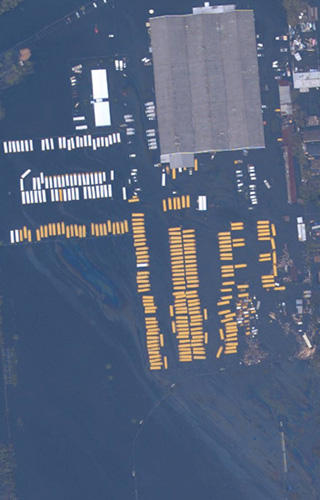
Buses - There has been a lot of coverage and an aerial photo of the 255 school buses that are still sitting in flood water; they were not used to evacuate people. If they were crammed with 55 people in each, then 14,025 could have been evacuated. Photo - You can't blame Bush for the mayor not using them. Resource - Rich Moran has built a timeline of the events in the Katrina response.

Tuesday, September 06, 2005

New Orleans Air Traffic Controllers

Air traffic controllers in the New Orleans area had a triple challenge when the rescue/relief efforts scaled up last week. They were short of staff due to people caring for their own flooded homes. Most of thier phones lines and some radios were out. And they had to handle up to 100 helicopter operations per hours, which they hadn't done before. Kudos to the FAA's air traffic controllers and their union, National Air Traffic Controllers Union. Story in USA Today - 9/6/05

Sunday, September 04, 2005

Katrina Responses

I am overwhelmed by the natural disaster of Katrina, the human tragedy of its victims and the combination of heroism and folly, extraordinary effort and apparent laziness in the responses of both victims and responders. My friend Jim Miller expresses frusteration equivalent to mine. The mayor, governor and president ordered evacuation and attempted to get people to carry it out. Many people chose to stay when they were capable of leaving. Some could not. Now there was provision to shelter a few thousand who were hard to relocate. But the facilites were overwhelmed by numbers increased by those who could have left. And furthermore, the Superdome was chosen as a shelter for its strength against the hurricane. NOT for the flooding and the extended stay it required. Low lights Jesse Jackson, who claims to be a reverend, looks only at race. Race baiting made him rich. But I don't care what JJ declares since he got caught spending donations to his nonprofit to pay for his mistress's house.
And he also criticized the role given to former presidents George Bush senior and Bill Clinton as coordinators for a fund raising effort following the Katrina tragedy, similar to their role as tsunami fund raisers. "Why are there no African Americans in that circle?" Jackson asked. "How can blacks be left out of the leadership and trapped into the suffering
Mike Fancher, the reader's representative at the Seattle Times thinks that it is incredibly brave to carry a notebook and ask questions. The herioc reporter is a first responder taking notes while others are saving lives. Oh. Mixed Errol Lewis of the New York Daily News considers the people to still under slavery!!
That hard, unsympathetic view is the traditional American response to the poverty, ignorance and rage that afflict many of us whose great-great-grandparents once made up the captive African slave labor pool.
Then he points out the ugly facts on the corruption that the people of New Orleans and Louisiana have allowed.
These government failures are not merely a matter of incompetence. Louisiana and New Orleans have a long, well-known reputation for corruption: as former congressman Billy Tauzin once put it, "half of Louisiana is under water and the other half is under indictment." That's putting it mildly. Adjusted for population size, the state ranks third in the number of elected officials convicted of crimes (Mississippi is No. 1). Recent scandals include the conviction of 14 state judges and an FBI raid on the business and personal files of a Louisiana congressman.... The rot included the New Orleans Police Department, which in the 1990s had the dubious distinction of being the nation's most corrupt police force and the least effective: the city had the highest murder rate in America. More than 50 officers were eventually convicted of crimes including murder, rape and robbery; two are currently on Death Row.
Can they expect a full-faith effort from the politicians, bureaucrats and police who have gotten away with allowing such a mess? Of course not. I am praying for the people displaced, injured, sick, victims of looting. And for the responders sent in to help.

Wednesday, August 31, 2005

Fewer, not more, Hurricanes

James Glassman is hopping mad about people who claim that you and I are at fault for global warming and global warming has resulted in more hurricanes. Therefore Katrina is your fault. His article at TechCentralStation
A profound tragedy is unfolding in New Orleans... That is why the response of environmental extremists fills me with what only can be called disgust. They have decided to exploit the death and devastation to win support for the failed Kyoto Protocol, which requires massive cutbacks in energy use to reduce, by a few tenths of a degree, surface warming projected 100 years from now. Katrina has nothing to do with global warming. Nothing. It has everything to do with the immense forces of nature that have been unleashed many, many times before and the inability of humans, even the most brilliant engineers, to tame these forces. Giant hurricanes are rare, but they are not new. And they are not increasing. To the contrary. Just go to the website of the National Hurricane Center and check out a table that lists hurricanes by category and decade. The peak for major hurricanes (categories 3,4,5) came in the decades of the 1930s, 1940s and 1950s, when such storms averaged 9 per decade. In the 1960s, there were 6 such storms; in the 1970s, 4; in the 1980s, 5; in the 1990s, 5; and for 2001-04, there were 3. Category 4 and 5 storms were also more prevalent in the past than they are now. As for Category 5 storms, there have been only three since the 1850s: in the decades of the 1930s, 1960s and 1990s.
The table he cites that counts hurricanes by intensity by decade that hit the US mainland is at NOAA's National Hurricane Center And the revered New York Times also has the science that does not connect global warming and hurricanes.
Because hurricanes form over warm ocean water, it is easy to assume that the recent rise in their number and ferocity is because of global warming. But that is not the case, scientists say. Instead, the severity of hurricane seasons changes with cycles of temperatures of several decades in the Atlantic Ocean. The recent onslaught "is very much natural," said William M. Gray, a professor of atmospheric science at Colorado State University who issues forecasts for the hurricane season.
Let's stick to the science. Hurricanes have decreased, not increased. And their cycle is over long-term ocean temperature cycles.

Let's help the victims of Katrina

Let's do what we can to help the Americans who were victims of hurricane Katrina in Louisiana, Mississippi and Alabama and Florida, I guess. There are many charities that are working in the area. I have personal knowledge of current and past leaders of
Mercy Corps.
They are fine people and their organization has a track record of getting 92% of every dollar to recipients. I am joining a coordinated effort of bloggers to direct readers to charities helping Katrina victims on September 1. See Truth Laid Bear for the complete list. Last I checked it had 534 blogs participating. And I am supposed to include Technorati tags: and And Glenn Reynolds, the Instapundit's Blog burst page.

Monday, August 29, 2005

US continuing to grow and lead

What will the world’s economy look like in 2020? What will the power relationships be amongst the United States, the European countries, China and India? Where will the largest areas of growth be? Jacques-Henri David President of the Deutsche Bank Group in France writes in Le Figaro
In 2020, the United States will remain the world superpower, with a total GNP of approximately $17 trillion to $18 trillion. Thanks to its dynamic demographics (1% annual population growth), a productivity and a competitiveness amongst the best in the world (currently second in the world and far out in front of Germany (13th) or France (26th) according to statistics from the World Economic Forum), and thanks also to its constant drive to create and innovate, and with flexibility due to the mobility of its labor force, the United States will maintain a clear advantage over China and India and will widen the gap with Europe. With average per capita salaries of approximately $55,000, the income of the average American in 2020 will be 1.5 to 2 times greater than that of a European; five times higher than that of a Chinese and nine times more than that of an Indian (approximately $6,000 per capita). China will indisputably be the world’s second greatest economic power, with a GNP of some $14 trillion, or three times higher than today.... Paradoxically, one of its handicaps will be an aging population, due to the delayed impact of its "one child policy." By 2020, the median age in China will be approximately 40 years, which will be higher than in the United States. The world’s third greatest economic power will be India, but far behind the first two, with a GNP of about $7 trillion.... In Europe, Germany, France, along with Italy and the United Kingdom, should lose ground in the world competition with a GNP per country of about $2 to 2.5 trillion. While European countries will remain rich in terms of per capita income (about $32,500), their relative weight will decline with their demographics and weaker growth (on average, almost half as much as the United States). Countries like Spain or Ireland will experience a higher level of development than the European average, thanks to a wider opening of their economies to the outside, the dynamism of their investments, good population growth forecasts and effective immigration policies.
Some of the French and Germans know that growth comes by opening their economies, dynamic investments and population growth. But this banker expects that they will watch other countries grow while they stagnate.

Sunday, August 28, 2005

Milken Institute - good organization

Beach blogging. No sailing since my wife is suffering major back problems. Mostly sunny and 15 mph plus winds. The Milken Institute is a think tank set up by Michael Milken. Milken enabled major new technology developments in the 1980s by inventing new financing tools - junk bonds enabled leveraged buyouts, most cell phone development. Read George Gilder's positive analysis of Milken. Yes, Milken was convicted of securities fraud and spent time in prison. Milken had cancer and fought it off. Now he is putting his talent and energy into the Milken Institute. Milken hosts an annual conference that attracts the brightest and best in economic development, new technology, financing, etc. The past two years he has hosted a panel in which the 3 other members are Nobel winning economists. I am impressed. Milken has a quarterly journal that is excellent. Accessing the articles requires registration, but you get a downloaded PDF file. The current issue highlights China. The World Bank's representative in China David Dollar writes that China's sprint to prosperity has left the country more vulnerable to stumbles that we would like to think. Worse, and more importantly, the global economy's success is now hostage to China's. If China fails to manage its financial system, to adjust to natural resource scarcity or to cope with its enormous air and water pollution problems will be felt by its neighbors, trading partners, that's us, and it geopolitical rivals - us again. I can't link to individual articles; here is the table of contents. Nuclear power is becoming the "energy source du jour." Rising costs for oil, gas and coal combined with fear of global warming lead to increased interest in nuclear. Nuclear produces no CO2 emissions at all. So it should be - should be - the environmentalists energy source of choice. The recent energy bill passed by Congress contained several incentives for nuclear power. I thought I blogged on it... But more is needed. The gigantic, decades-long effort to build a long-term storage for nuclear waste in the US has been way laid by a federal judge who insists on eternal perfection. Congress will have to overrule the judge and set a reasonable standard. Again, table of contents. Unfriendly to business - states Milken Institute analyzed how friendly state are to business. If they want jobs they need businesses to locate there and stay! But some states place huge roadblocks before businesses.
  • The worst by far - Hawaii
  • New York
  • Massachusetts
  • California
See the whole story and list

Friday, August 26, 2005

Making good news look bad = Seattle Times

The Base Closure and Realignment Commission while looking at closing military bases has good news for the state of Washington.
"At NAS Whidbey the future is so bright you got to wear shades," Larsen said in a statement. "The BRAC Commission's decision will have no impact on the NAS Whidbey's future." [Rep. Rick Larsen, D, WA] Whidbey Island is the home of the EA-6B Prowler and the new home of the next generation of electronic attack planes, the EA-18G, Larsen said. And the Oak Harbor community will soon welcome an aircraft squadron from Spain that will add about 500 new jobs, he said.
And the larger bases are essential: Fort Lewis, McChord AFB, Naval Station Everett, Naval Station/Shipyard Bremerton. So the Times paints these facts as bas news. What bad news? Bremerton was hoping to add more jobs from shipyard closings in Connecticut and Maine. But those will stay open, so Bremerton won't get more jobs.
Vote on Maine base may keep hoped-for jobs from Bremerton
was the large headline on the front page. The people of Bremerton are disappointed they didn't get more jobs. Headline news.

Thursday, August 25, 2005

Bet on price of oil

Prices are arbitrated in the market place. Now we have an interesting "market" for oil. John Tierney of the New York Times doesn't agree with the pessimistic forecast of Matthew Simmons, an investment banker and expert on the oil market. Tierney put his money where his mouth is. He challenged Simmons to a bet on the price of oil in 2010, that it would not rise as much as Simmons projected. Here is Tierney's version in the International Herald Tribune.
After reading his prediction, quoted Sunday in the cover story of The New York Times Magazine, that oil prices will soar into the triple digits, I called to ask if he'd back his prophecy with cash. Without a second's hesitation, he agreed to bet me $5,000. His only concern seemed to be that he was fleecing me. Mr. Simmons, the head of a Houston investment bank specializing in the energy industry, patiently explained to me why Saudi Arabia's oil production would falter much sooner than expected. That's the thesis of his new book, Twilight in the Desert: The Coming Saudi Oil Shock and the World Economy. I didn't try to argue with him about Saudi Arabia, because I know next to nothing about oil production there or anywhere else. I'm just following the advice of a mentor and friend, the economist Julian Simon: if you find anyone willing to bet that natural resource prices are going up, take him for all you can. Julian took up gambling during the last end-of-oil crisis, in 1980, when experts were predicting a new age of scarcity as the planet's resources were depleted by the growing population. Julian had debunked these fears in The Ultimate Resource, the bible of Cornucopian economics, which showed how human ingenuity had kept driving down the price of energy and other natural resources for centuries. He offered to bet the pessimists that oil or any other resource they chose would be cheaper, in real terms, at any date they picked in the future. The ecologist Paul Ehrlich, author of "The Population Bomb" and "The End of Affluence," took up his offer and chose copper, tin and three other metals worth $1,000 in 1980. When the famous bet was settled 10 years later, the value of the metals had declined by more than half. As usual, people had found new ways to get the metals as well as cheaper substitutes, like the fiber optic cables that replaced copper telephone wires.
The blog at Laissez Faire Books does a good summary.

Tuesday, August 23, 2005

Hawaii - Senators Inouye and Akaka on the defensive

Update on the Akaka Bill in the US Senate Senator Inouye staring at the headlights. The Honolulu Star-Bulletin on 8/22 shows the locals what he has been doing 5,000 miles away. They give Inouye's side first. But then they give the floor to ex-Senators Gorton and Brown, as I covered before, and they overpower Inouye's weak "I didn't intend to mislead them." Inouye promised in 1993 that he was not leading to a race-based government, but he was. But the Star-Bulletin tells half of the truth about Senator Akaka saying on NPR that this bill could lead to Hawaii seceding from the United States. They report his denial, but not what he said:
Those who doubt this only have to listen to Sen. Akaka himself, who acknowledges that his bill would open a can of worms. On Monday, National Public Radio reported the Senator as saying that the sovereignty granted Native Hawaiians in the bill "could eventually go further, perhaps even leading to outright independence." Sen. Akaka was quoted as adding: "That could be. That could be. As far as what's going to happen at the other end, I'm leaving it up to my grandchildren and great-grandchildren."
Yes, I am bothered by this bill about how Hawaii is governed. I like Hawaii and want it to stay a state of the US. I think this bill would both be bad for Hawaii and a bad precedent, leading other racial groups to demand their own enclave to govern.

Monday, August 22, 2005

Discovery Institute in the New York Times

Discovery Institute in Seattle is in the news - the front page of the New York Times Sunday and Monday. Discovery is not a one-song band; it has wide interests. Its Cascadia Project is proposing solutions for regional transportation problems. There is a program on technology with star George Gilder. Our friend James Na is a fellow in foreign policy. And more ... But the NYT is very concerned about the Center for Science and Society and its work in intelligent design.
Pushing a "teach the controversy" approach to evolution, the institute has in many ways transformed the debate into an issue of academic freedom rather than a confrontation between biology and religion.
The NYT discovered that Discovery is interested in some issues and has programs based on them and raises money to carry out the programs. Surprise. I spend money on what I am interested in also. They found only one clearly liberal donor that stopped giving and that might have been for one the of other programs. The others have stayed on. Discovery President Bruce Chapman gives his analysis of the NYT research and story. Has Discovery carried out research? Yes. Has its fellows published books? Yes - Link Have they published papers in peer-reviewed journals? Yes Link James Na summarizes it well:
The actual Discovery policy position, however, is very mild: it wants schools to teach evolution as the dominant paradigm, but also wants the pupils to be exposed to some of the scientific gaps and problems associated with the evolutionary theory, which is invariably taught in schools as an almost god-given truth. It does NOT support mandating the teaching of intelligent design.

Sunday, August 21, 2005

Market Solutions for Automobile Guilt

Online! After several frustrating weekends the wifi internet access at our weekend cabin is working. Beach blogging today. Are you feeling guilty about driving your SUV? Or your 4-door sedan? Come on, every vehicle emits CO2. And if you believe that global warming is caused by you, then you should feel guilty about the damage you are creating. Several companies have arrangements where you can buy someone else's right to emit CO2. If your household emits 50 tons of CO2 per year, then you can buy off other parties for an equivalent 50 tons of CO2, so the net effect is zero emissions. Slate Online has an article describing the process and the companies. Via new blogging friends at Democracy Market in California.
The nonprofit Carbonfund is one group that buys credits, which represent the right to emit a given quantity of greenhouse gases, on a market called the Chicago Climate Exchange. The companies listed on CCX, all of whom have voluntarily agreed to emissions reductions, buy and sell pollution rights to one another as a cost-effective means of meeting their targets. Carbonfund buys credits from companies with low emissions and then "retires" them. Instead of a company buying credits so they can continue to pollute, Carbonfund tears them up and that much less fuel gets burned.
Another approach is to directly underwrite CO2-saving energy research and use.
TerraPass, a for-profit group cooked up by a Wharton professor and his students, is one of many ventures that sell you the chance to offset your fossil-fueled existence, either by underwriting non-fossil power or by paying for pollution reductions. NewWind Energy, for instance, uses your guilt money to make wind power available to power companies at prices that are competitive with fossil fuel-based energy sources... [NWE] charges about $37 to cancel out a ton of CO2 emissions.
The Slate author calculated that his household emits 50 tons of CO2 per year. The cheapest trade he found was Carbon Source for $5.50 per ton. So he can face his friends for only $274 per year. One caution, in a market you have to trust your trading partner to carry out his side of the deal. Can the nonprofits/companies cheat? Yes, they can. So there needs to be some auditing and spreading the word about who carries through and who doesn't. Good intentions only get you so far when you have to implement your promises. And outside of cheating, sometimes it's hard for your partner to implement your lofty ambitions. The Dutch have found great frustrations in paying a Brazilians landfill to burn methane. I covered this in "Gallant Effort for Kyoto" Oh, and for that guilt. If you go with TerraPass you get a neat bumper sticker to put on your gas guzzler! Added. I like TerraPass's blog's analysis of MBTE. Congress decreed that MBTE be added to gasoline. Then it was found that MBTE was getting into water tables all over the country. So of course the people who demanded that MBTE be mandated tried to blame the pollution of the water on the oil companies. But the companies had just followed the law. Congress is to blame. Good news: in this year's energy bill Congress took some responsibility by allowing protection to the oil companies against law suits. But step back. If Congress has said to reduce which-ever exhaust pollutant and left it to the oil companies to find the solution there would have been two big effects. 1- To the greenies delight, they could blame the e-e-evil oil companies. 2- The oil companies could have looked at alternate ways of getting the required reduction. And among the alternates, when one turned out to have side effects, they could have gone with another solution = the Market Way.

Friday, August 19, 2005

Europe Stagnation - Steyn

So you want zero population growth? Then move to the former East Germany. They have negative population growth! Negative growth costs. And there are fewer people to pay, so the costs can't be spread and hit the dwindling few very hard. Cost more? Listen to Mark Steyn interviewed by Hugh Hewitt:
You know, East German towns have been emptying, depopulating so fast that the sewer systems don't run properly. They've had to spend money...you know, when people talk about spending money on infrastructure, we normally think it means building bigger and more efficient...bigger, modern sewer systems, that can cope with more. Here they're actually having to dig them up and make the pipes smaller to enable them to flow. I mean, this isn't...you know, we worry about sustainable growth. Europe has to cope with sustainable lack of growth.
This is just one example of the costs that the people of Europe have to face - they haven't yet.
Well, I think you're in one of these situations where the people aren't quite ready to swallow the bitter medicine. So if you say to them, are you prepared to take...to have fewer paid vacations per year, you know, these paid holidays that seem extraordinary to Americans, where you basically gets weeks and weeks off each year, paid for by your employer, they're not yet ready to give those up. They're not yet ready to give up the cradle to grave welfare. And the question is, how much of this bitter medicine are they prepared to swallow? Or do they want to push it even further to breaking point, because they've got terrible, terrible difficulties ahead of them.
Yes, he said "push it to the breaking point." I don't take any pleasure in Europe's stagnation getting worse. But for the Europeans' derision of the backward United States, we are dealing with growth; they have no growth and aging populations that expect to work short hours and retire early. It's going to break. I prefer the problems of growth. Steyn's web site.

Wednesday, August 17, 2005

Hawaii regresses to racial government

All the forces of Hawaii converged to get the US Congress to allow race-based government in the currently 50th state. To allow such a government requires setting aside our US Constitution and our civil-rights laws. The Akaka Bill classifies citizens by race, defying the express provisions of the 14th Amendment. Slade Gorton of Washington was a senator when a previous bill passed. He says this bill breaks promises that Senator Inouye made in 1993 when a resolution for apology was passed. Wall Street Journal - this one is free!
The Apology Resolution distorted historical truths. It falsely claimed that the U.S. participated in the wrongful overthrow of Queen Liliuokalani in 1893. The U.S. remained strictly neutral. It provided neither arms, nor economic assistance, nor diplomatic support to a band of Hawaiian insurgents, who prevailed without firing a single shot, largely because neither the Native Hawaiian numerical majority nor the queen's own government resisted the end of the Hawaiian Kingdom. The queen authored her own ouster by planning a coup against the Hawaii Constitution to recapture monarchical powers that had been lost in a strong democratic current. She later confided to Sen. George Hoar that annexation to the U.S. was the best thing that could have happened to Native Hawaiians. The resolution falsely asserted that the Kingdom of Hawaii featured a Native Hawaiian government exclusively for Native Hawaiians prior to the 1893 events. In fact, the kingdom was a splendid fusion of both native and nonnative elements in both government and society. The definitive historian of the kingdom, R.S. Kuykendall, elaborated: "The policy being followed looked to the creation of an Hawaiian state by the fusion of native and foreign ideas and the union of native and foreign personnel, bringing into being an Hawaiian body politic in which all elements, both Polynesian and haole, should work together for the common good under the mild and enlightened rule of an Hawaiian king." The apology falsely declared that Native Hawaiians enjoyed inherent sovereignty over Hawaii to the exclusion of non-Native Hawaiians. To the extent sovereignty existed outside the monarch, it reposed equally with all Hawaiians irrespective of ancestry. The apology falsely maintained that Native Hawaiians never by plebiscite relinquished sovereignty to the U.S. In 1959, Native Hawaiians voted by at least a 2-to-1 margin for statehood in a plebiscite. Finally, the Apology Resolution and its misbegotten offspring, the Akaka Bill, betray this nation's sacred motto: E pluribus unum. They would begin a process of splintering sovereignties in the U.S. for every racial, ethnic or religious group traumatized by an identity crisis. Movement is already afoot among a few Hispanic Americans to carve out race-based sovereignty from eight western states because the U.S. "wrongfully" defeated Mexico in the Mexican-American war.
Now is not the time to regress to race-based government. And the Senate should surely reject a bill that is based on a list of untruths. I don't see how Gorton and Brown believe that Daniel Inouye is a man of integrity. The bill hasn't passed yet, but the vote will be soon. My previous post in July See Hawaii Reporter for the views of Hawaiians. Also Grassroot Institute of Hawaii.

Tuesday, August 16, 2005

Stop this trade war

Our president is speaking double again. In one week he turned from strong trade advocate to protectionist. Three weeks ago Bush put great effort into pushing CAFTA - Central American Free Trade Agreement - through Congress. (I call this a trade agreement, not free trade, because it is not free; it is very managed trade. But it is trade.) Then last week Bush turned around and violated NAFTA by rejecting the ruling against the US in the matter of soft-wood imports from Canada. The ruling by a 3-person arbitration panel requires the US to return the tariffs collected - about $5 billion. How can Bush push new trade agreements when he violates the ones already in place? He pandered to the steel-producing states in 2001 by placing a tariff on imported steel at great cost to manufacturers of steel products and consumers. Now he is doing it again.

We Lose

Homes will be more affordable when this tariff is finally gone. The American Homeowners Alliance estimates that it will reduce the construction cost of a new home by $1,000 on average. That will make about 300,000 more moderate-income families eligible to own. President Bush should welcome the ruling for its benefits to consumers and to the economy. And, incidentally, he should appreciate that the NAFTA trade agreement is working as it should. And to make the bad news worse, the Bush administration is proposing to double the damage to consumers, demanding that Canada impose a tax on lumber exports so prices rise here. I sure don't understand. The Wall Street Journal has an excellent editorial on this on August 15, but it requires a paid subscription.

Monday, August 15, 2005

9/11 Coverup by The 9/11 Commission

The 9/11 Commission that was set up to discover what was behind the 9/11 coordinated attack hid critical information. Mark Steyn covers the recent disclosure.
"If you want to know everything wrong with the 9/11 Commission in a single sound bite, consider this from Al Felzenberg, its official spokesman, speaking Wednesday: ''There was no way that Atta could have been in the United States at that time, which is why the staff didn't give this tremendous weight when they were writing the report. This information was not meshing with the other information that we had.''
The 9/11 Commission covered up the fact that military intelligence had found Mohammed Atta over a year before the 9/11 attack.
In fairness to Felzenberg, he was having a bad week, and a hard time staying on top of the commission's ever-shifting version of events. It emerged that the U.S. military had fingered Mohammed Atta -- the guy who plowed Flight 11 into the first World Trade Center tower -- well over a year before before 9/11. Or as the Associated Press puts it: "A classified military intelligence unit called 'Able Danger' identified Atta and three other hijackers in 1999 as potential members of a terrorist cell in New York City."
The shifting story:
At first, the commission denied that it knew anything about "Able Danger": "The Sept. 11 Commission did not learn of any U.S. government knowledge prior to 9/11 of surveillance of Mohammed Atta or of his cell," insisted Lee Hamilton, the Democratic co-chair. "Had we learned of it, obviously, it would've been a major focus of our investigation." But within 48 hours this version was non-operative. As the AP subsequently reported: "The Sept. 11 Commission knew military intelligence officials had identified lead hijacker Mohamed Atta as a member of al-Qaida who might be part of U.S.-based terror cell more than a year before the terror attacks but decided not to include that in its final report, a spokesman acknowledged Thursday." So, far from being a "major focus" that they just happened to miss -- coulda happened to anyone -- it turns out they knew about it but "decided not to include" it.
Why did the 9/11 Commission hide this critical information? Because Jamie Gorelick was the person who erected the wall between law enforcement and the military, preventing them from sharing information. And Gorelick was appointed to the 9/11 Commission by the Democrats. So she was in the place to prevent the disclosure of what she did - how Gorelick prevented the use of information that could have saved lives. Steyn covers it very well. Though some more of the story has come out since his article.

Friday, August 12, 2005

Gallant effort for Kyoto

The Dutch are actually making an effort to meet some of the Kyoto goals. Other countries have made little or no progress, all but abandoning the goals.
NOVA IGUACU, Brazil -- In a big dirt pit here, workers wearing protective masks piled rocks around cement columns jutting up from rotting trash. Some 6,000 miles away, Dutch officials awaited word of their progress. The Brazilian workers and the Dutch government have been brought together in an unusual partnership by the Kyoto Protocol, the international treaty under which most industrialized countries, other than the U.S., have pledged to reduce their global-warming emissions by 2012. The workers are building a modern landfill, a rarity in the developing world. The columns are part of a system to capture methane from the city's decomposing rubbish before it wafts up into the atmosphere. Methane is a particularly potent global-warming gas; by burning it, and thus converting it into a less-potent gas, carbon dioxide, the landfill will significantly reduce its output of global-warming pollution. That makes this garbage pile a gold mine in a new international market: the buying and selling of greenhouse-gas emission "credits." Each credit that a buyer in the industrialized world purchases from a seller in a developing country reduces the buyer's obligation to clean up its act back home. In theory, the system will reduce global emissions of greenhouse gases by sending money from industrialized nations to developing ones to tackle projects that otherwise wouldn't have gotten off the ground."Just by flaring methane," explains Pedro Moura Costa, a 41-year-old Brazilian-born scientist who founded EcoSecurities Ltd., the company behind the gas-recovery operation, "you're creating a lot of credits." The Netherlands agreed under Kyoto to cut its greenhouse-gas emissions 6% below 1990 levels by 2012. Cutting a ton of emissions in the Netherlands is expensive: about $25 to $50, Dutch officials estimate. So for half their planned cuts, the Dutch shopped around mostly in developing countries for cheaper deals. Here in Nova Iguaçu, they've agreed to buy as much methane as this landfill is expected to snag -- for $4.15 per ton.
But now they get off track:
"We never can reach this target by doing things at home" exclusively, says Maurits Blanson Henkemans, the Dutch economic ministry's senior official on climate issues..
Yes, they could do it at home - by reducing their economy. From all evidence that is what the Kyoto architects intended - to save the earth by shutting down the United States' economy, and incidentally one or two other advanced countries. And notice that they are not getting rid of CO2, but methane.
So far, the results aren't encouraging. Renewable-energy projects recently have been producing only about a third of the credits sold on the international market, according to a report from the World Bank, one of the market's biggest boosters. The problem is that CO2-reducing projects are proving less desirable to credit buyers than projects that go after more-potent, but less prevalent gases. A project that avoids the emission of a ton of CO2 produces just one credit. But, because scientists say a ton of emitted methane does as much damage to the planet as 21 tons of CO2, a project that cuts a ton of methane generates 21 Kyoto credits.
The results are mixed. They are burning methane and getting credits for it. But not as much as expected and the finger pointing begins. Scientist Moura Costa says the landfill operators are relying on seepage of the methane, but they should get serious about extracting and install pumps, etc. And they expected to be generating electric power by now, but they are not. The Wall Street Journal has the story. Subscription required, I am afraid.

Thursday, August 11, 2005

Lying about Judge Roberts

NARAL Proabortion is running ads that lie about Judge Roberts, the Supreme Court nominee. At the Wall Street Journal Manuel Miranda has the correction. And Annenberg's Fact Check.org has the facts. "NARAL Falsely Accuses Supreme Court Nominee Roberts" We have to get the word out about every lie and distortion against this fine man.

Wednesday, August 10, 2005

Truth about Hillary

Finally a day less than 85F in the coastal mountains of BC. I quickly read The Truth About Hillary by Edward Klein. He paints the picture through the book of the kind of person she is - controlling, win at any cost, any cost, left-wing. He points out many lies she has told. But I am bothered by the lies he doesn't correct. I was there the day in July or August, 1994, when Hillary brought her big-brother health-care program to Seattle. The response in Seattle put a substantial dent in the cake walk she expected. The day before in Portland, Oregon, the federal workers came out by the hundreds to cheer her. But, stroke of luck, her event in Seattle was on a Saturday so the civil "servants" weren't there - only the people who made an effort were there. That included 2 or 300 conservative talk-radio listeners. The spirited opposition in Seattle was reported across the country and similar groups met the queen at every stop and had a strong impact. Hillary says that people tried to keep her from talking. Wrong. There was good-natured opposition with signs and a welcome Bronx cheer, but no effort to shut her up. Hillary says that there was violence and weapons were being taken off of people. The report of violence wasn't made until about Wednesday by a poor source - Senator Pattie (that's what she calls herself) Murray. There was no eye witness on Saturday or Sunday or Monday or Tuesday. Weapons - one guy got stopped with a fire arm. He was walking along the street and had no idea that the secret service was there for the First Lady. He had noting to do with the conservative turn out. I am trying to recall one other non correction. Later. Ignore the spin against Klein's book. It is a good, quick read.

Tuesday, August 09, 2005

Excluding God from business

I am still in Canada Nortel Networks Corp of Canada fired its CEO Gary Daichendt for praying. Daichendt told colleagues that he had prayed with his wife for guidance the night before an important decision.
That statement became a defining moment in Mr. Daichendt's stormy, short-lived tenure at Nortel... [T]his devout Christian from California has been portrayed in the press as a religious zealot who not only talked about prayer but also told the Nortel board he had a message from God to depose the incumbent CEO. Mr. Daichendt adamantly denies he made that divinely ordered power play, but concedes "I prayed with my wife. That's a true statement because I am a man of faith.
Daichendt is not reported to have proselytized his coworkers. Higher ethics are now demanded from corporate officers
but not necessarily more religion. Yet it is hard to disentangle the two. Mr. Daichendt was welcomed into troubled Nortel because he was grounded in strong ideals...
Well it is a complete package. If you welcome a Christian for his strong ideals don't be surprised at his faith. And it makes no sense to fire a leader for using his strength - his faith. Toronto Globe and Mail, Monday 8/8/2005, page B10. I can't find it online, but here is the Globe and Mail.

Saturday, August 06, 2005

Hiroshima Saved Lives

On vacation at Whistler, BC, Canada in an internet cafe with a view of The Mountain itself: People are wringing their hand over the "terrible" thing president Harry Truman did when he used atomic bombs against 2 Japan cities 60 years ago. Japan was preparing to defend their homeland. The invasion was expected on the southern island of Kyushu and they were beefing up the defenses. Japan was on the run; they had lost most - all? - of the land they had captured. So strategic defeat had been accomplished. But the war machine was continuing to fight. The military leaders estimated that it would cost 1,000,000 Allied lives, mostly American, and every more Japanese lives. A large number of kamikaze planes were prepared which can take a large toll on a ship with just one airplane. And, regarding the numbers of dead in the two cities, a number several times their sum had already been lost to Allied bombing of Japanese cities. So why kill more? Because the stunning power of the one bomb delivered by one airplane would shock the Japanese military into realizing they could not outlast the US. The best suggested alternative was a demonstration blast over an uninhabited area. But we only had two bombs and as we saw one was not enough. So it was right to use both for populated areas. Victor Davis Hanson explains it very well.

Wednesday, August 03, 2005

As France Does - Not

Professor Krugman explained last week that France is superior to the US because it has higher unemployment rate, slower growth and lower income per capita. Oringinal Source. Now you might ask why is it better to be poorer? Because the French are working less they have more time to be with their families. Krugman slants his data and argument against the United States in every column. So we have our designated Krugman fisker - Don Luskin. Luskin examines in National Review the differences and finds - the average Frenchman has lower disposable income than an American at the poverty line!! - Its average real GDP growth since 1991 has been 1.8% per year, compared to 3.1% for the United States. - Its GDP per capita is lower than all but the poorest four U.S. states — lower even than Alabama, a state Krugman nastily described the week before last as being populated by people too poorly educated to work in automobile factories.
In the meantime, Krugman rationalizes it away as a matter of "family values" — deliberately mocking the slogan of some American conservatives. He says members of the typical "French family are compensated for their lower income with much more time together," and that France is "extremely supportive of the family as an institution." Let's talk about that "lower income." Krugman Truth Squad member Bruce Bartlett points to a report by the European consulting firm Timbro that found that total private consumption per capita in France is about half that of the U.S. The average French family has a lower standard of living than Americans living below the poverty level. Impoverished Americans have 16% more dwelling space per capita than the average French; the American poor are more likely to have a car, a dishwasher, a microwave oven, a personal computer, and a clothes drier. So now we know what French families are doing with all that extra time together — they're crouching in cramped living quarters doing household labor.
At Discovery Institute Brett Swanson finds 2004 economics Nobel laureate Ed Prescott is bullish on Europe. Not because Europe is doing well, but because things are so bad that they have to get better! And the reason: the problem is high taxes and it can be fixed, if they have desire to:
Spain offers a good case for European optimism. Like many of its continental neighbors, Spain was afflicted with declining labor force participation through the mid-1990s. Let's pause here to look at some facts. From 1993-96, the average hours worked (per working age person, per week) in Spain was 16.5. This compares with 17.5 hours in France and 19.3 in Germany. Clearly, Spain wasn't working. Then, in 1998, Spain flattened its tax rate in a manner similar to the U.S. tax reforms of 1986. Coupled with labor market reforms of the previous year, Spain's labor force participation increased about 21% in the period 2000-2003, to 20 hours per week, exceeding that of Germany (18.3) and France (17.8). Correspondingly, this increase in labor participation led to increased tax revenues. (Incidentally, Spain, France and Germany all had slightly higher labor force participation rates than the U.S. in the early 1970s, when European tax rates were more in line with those in the U.S.)
But France will follow Krugman and be proud of their proverty. I hope not.

Monday, August 01, 2005

Election Progress

There is slow action on cleaning the Washington election mess. No. Sam Reed is not doing anything that makes things better. He is too busy defending his past failures. Thanks to Stefan Sharkanski at Sound Politics it appears that Norm Maleng overcame his terminal stiction* and moved slightly. King County is prosecuting 4 people who voted twice and 2 have already plead guilty. Seattle Times But Maleng won't go any farther. He needs Bob Williams to do his work. So Evergreen Freedom Foundation is doing what they can do; they are suing 9th Circuit Court of Appeals Judge Betty B. Fletcher for illegally registering to vote where she does not live. She registered downtown where she works. It is a felony to make a false statement when registering to vote. The law is RCW 29A.84.130 Evergreen Freedom Foundation

Clowns

Don't take him seriously and Rep. Jim Moeller, (D) Vancouver, won't take the election seriously. He earns the "Dumb E-mail from Elected Official" award. Stefan has his letter to Bob Williams for your entertainment at Sound Politics * Stiction - resting friction that make it hard to get moving. Webopedia Computer Dictionay